Ning Xu
Senior Machine Learning Engineer at NVIDIA.

I am a Senior Machine Learning Engineer at NVIDIA, working on world simulation for autonomous vehicles. Over the past six years, I have built spatial systems across the autonomy stack, spanning centimeter-accurate localization, online mapping, city-scale 3D SLAM, and neural scene reconstruction. This progression now drives a broader question in my work: how can we build models that not only reconstruct environments but also simulate how they evolve through interaction?
At NVIDIA, I helped bring Instant NuRec — a feed-forward 3D Gaussian Splatting model that turns a short multi-camera driving log into a fully simulatable 3D world — into NVIDIA’s autonomous vehicle simulation stack. Previously, at Nuro, I developed BEV-transformer models for online HD mapping and 3D SLAM systems operating at multi-city scale. At Motional, I engineered centimeter-accurate localization for production robotaxis. I received my M.S. in Robotics from the University of Michigan, advised by Prof. Chad Jenkins, and my B.E. from Beihang University.
I am particularly interested in action-conditioned world models, 3D/4D generative reconstruction, and data-driven simulation. I believe world models will be key to creating diverse, controllable, and closed-loop simulation environments for training and evaluating robots and autonomous vehicles at scale.
Selected Publications
Selected Projects
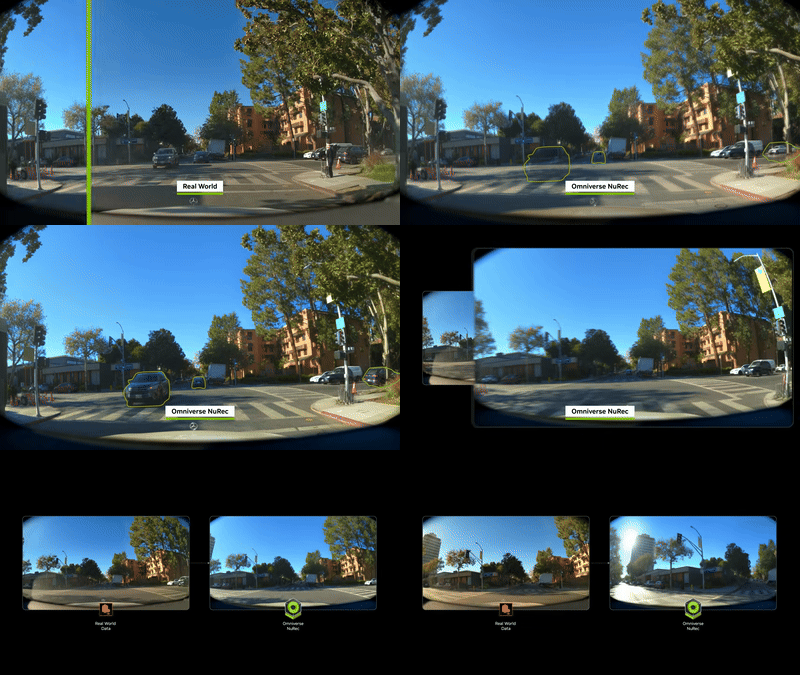
Turning real-world driving logs into fully simulatable 3D Gaussian Splatting worlds for closed-loop AV simulation with NVIDIA Omniverse NuRec — from integrating the feed-forward Instant NuRec model into the production reconstruction pipeline to delivering the camera-only NuRec solution.
Video
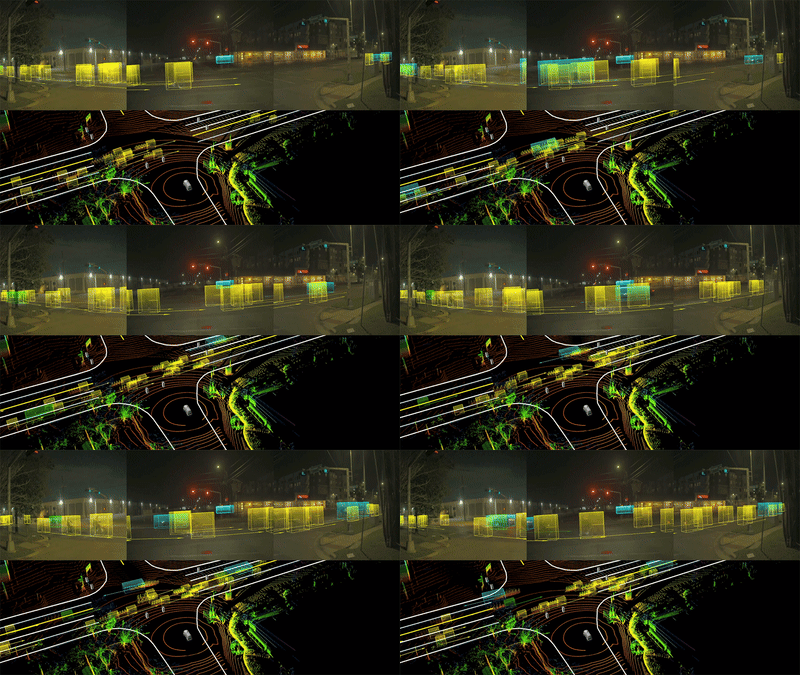
Prototyped and developed a BEV-transformer model for online HD map construction, integrated within Nuro's unified camera–LiDAR BEV perception framework — accelerating the deployment of multi-task perception models onto the road.
Blog
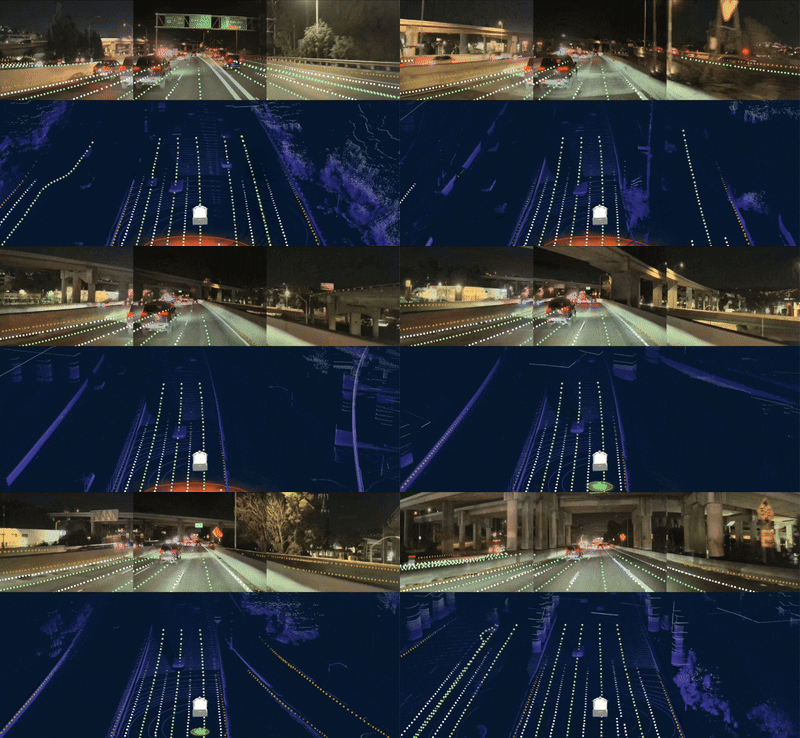
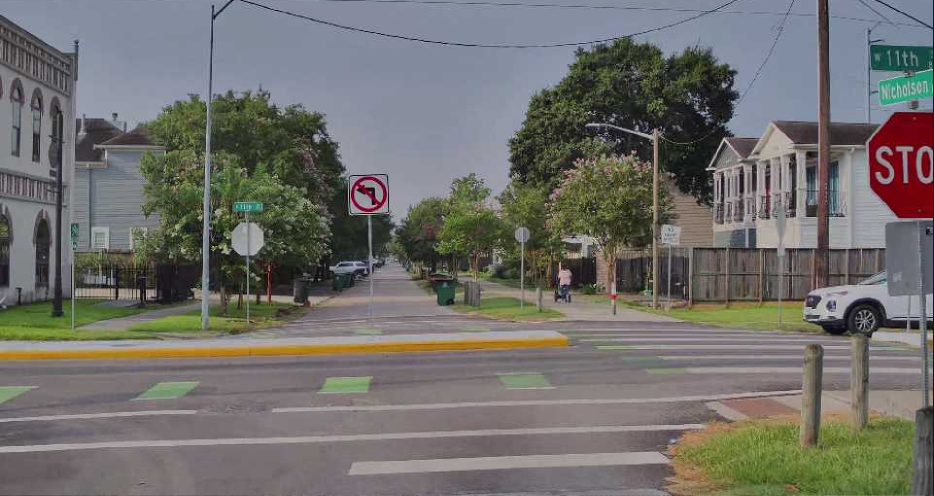
Applied research on fusing prior HD map data with real-time sensor streams, significantly improving robustness and safety against real-world environmental and structural map changes — the foundation of our CVPR 2024 paper.
Blog
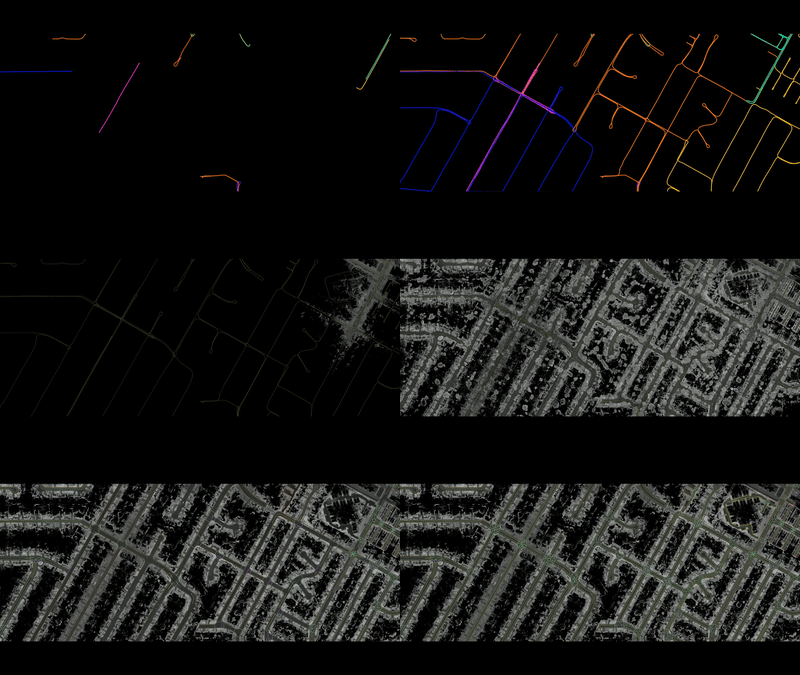
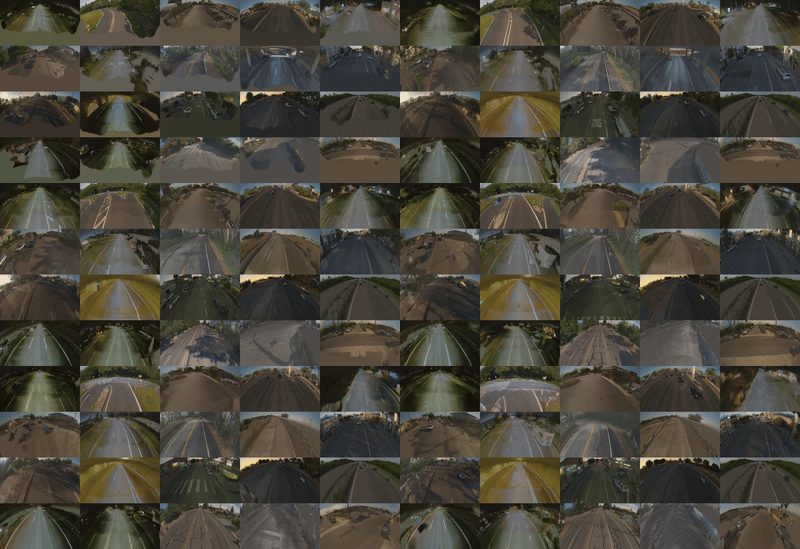
Built and maintained a highly reliable, multi-city-scale 3D mapping and SLAM pipeline — analyzing and optimizing scan matching and parallel graph optimization to unlock massive-scale, physics-grounded map building.
Blog